 Engine A/C Compressor Automatic Transmission Power Steering Shock Absorber Axial Seal
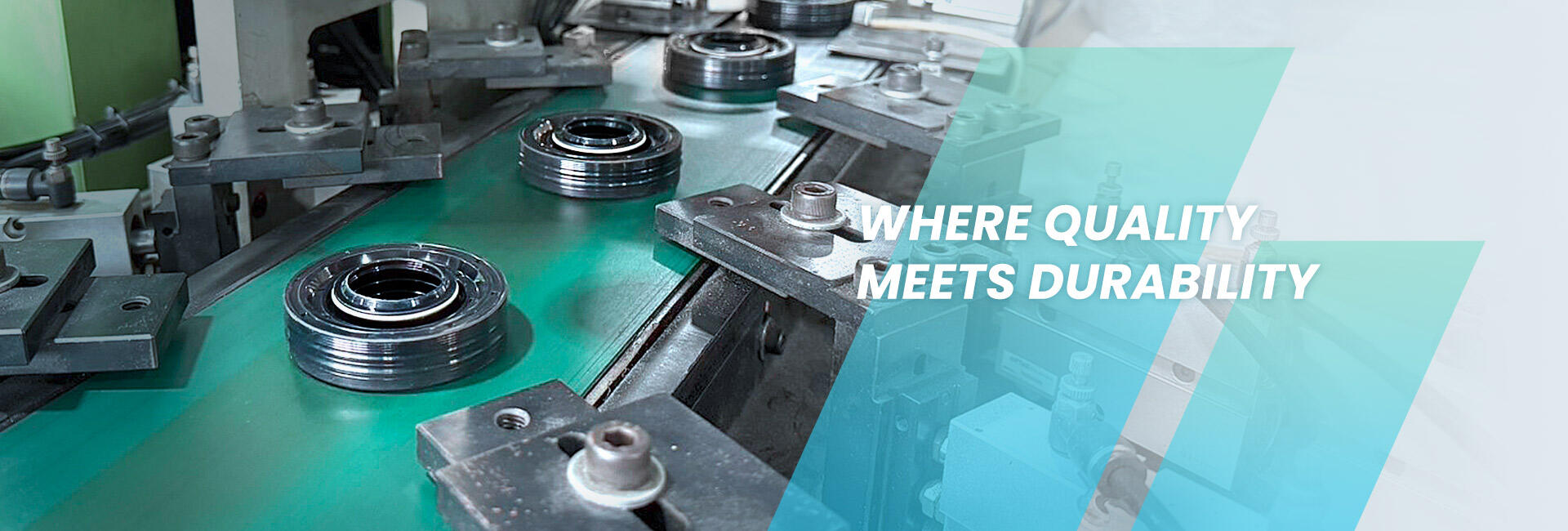 Engine A/C Compressor Automatic Transmission Power Steering Shock Absorber Axial Seal
 As the automotive industry grows, oil seals for engines, AC compressors, and power steering are vital for sealing fluids, retaining lubricants, and protecting bearings from contaminants. Besides Standard Rotary Shaft Seals, there are certain construction types typically used for automotive applications. Contact us for details on standard and specialized automotive seal types.
Engine |
At WinTek, we specialize in engine oil seals for applications such as crankshafts, camshafts, and turbochargers. Most of our engine oil seals feature a helix design to enhance sealing performance. Common rubber materials used for engine oil seals include ACM, MVQ, and FKM, each offering unique advantages based on the operating environment. For instance:
By selecting the appropriate material, our engine oil seals overcome operational challenges, ensuring reliable performance and durability in automotive engines.
| |
Type 10 & 11:
Type 10&11 with semi-rubber covered O.D. design provides both metal to metal fit and reliable rubber sealing at the same time and the ability to counter rough or worn housing. The design is typically used in automotive engine and transmission application.
| BI-Material Engine seals: BI-Material Engine seals are composed of ACM rubber on the O.D and FKM rubber on the sealing lip. Such rubber combination design provides seal to have the ability to accommodate in high speed high temperature shaft operating environment. |
| Type PL (PTFE seals): The design of PTFE bonded on sealing lip provides high tolerance in temperature capability ranging from -50°C to 250°C and good chemical resistance. It is widely used in aggressive environment due to its’ superior physical and mechanical attributes. PTFE seals are also ideal for users when low friction coefficient is needed which any other elastomers are not able to contribute to the equation. |
| Helix: The helix or hydrodynamic aid design is to generate a pumping action to push the medium back towards the fluid side, thus enhancing the sealing lip performance. Helix with single direction either in left-handed or right-handed and bi-direction is available to customers offering users to have better prevention and sealing solution in the operating content. |
Standard type seals are also commonly used in engine application.
WINTEK’s AC compressor seals are composed of metal cases with adhesion of rubber sealing primary lip (HNBR) and assembled with a high performance PTFE lip. Since R-12 refrigerant is environmentally harmful and is now substituted by R-134a hydro fluorocarbon HFC refrigerant which it requires to operate in specific lubrication and higher temperature. Our AC compressor seals with HNBR rubber material designs are compatible with R-134a refrigerant in high temperature and new lubricant environment. WINTEK undergoes testing process to stimulate the AC compressor seals while operating within the system to make sure that we provide customers with higher and excellent functionality, performance and long lasting seals. Wide ranges of AC compressor seals types are also available in WINTEK.
| |
Automatic Transmission |
A Transmission Bonded Piston Seal is a high-performance sealing solution used in automatic transmissions to control hydraulic pressure and fluid flow.
It features a rubber-to-metal bonded design, ensuring superior adhesion and durability under high pressure and temperature conditions. This seal provides efficient sealing between the piston and cylinder, reducing fluid leakage and optimizing transmission performance. Commonly used in clutch packs and accumulator pistons, it enhances shift quality, improves efficiency, and extends the lifespan of transmission components.
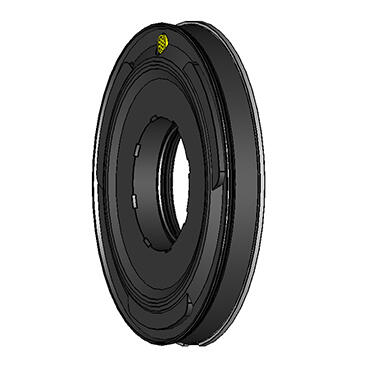
A Transmission Metal-Clad Seal is a high-performance oil seal designed to prevent fluid leakage and protect transmission components.
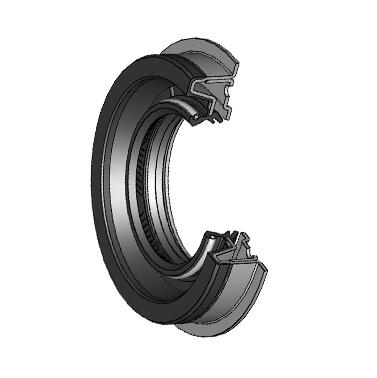
Power steering system helps drivers steer wheels while operating vehicles by adding energy to the steering mechanism. Energy added to the system by power steering helps drivers to reduce physical strength needed when turning the wheel whether when the vehicle is moving at high speed, low speed, or static.
Types of adding power to the steering system are hydraulic power steering system, electronic power steering system, and electro-hydraulic power steering system (Hybrid). Hydraulic power steering system uses pressurized hydraulic fluids to generate power to the machinery whereas electronic power steering system generates power to the machine by using electric motor. Electro-hydraulic power steering system utilizes the same hydraulic technology but only the hydraulic pressure is generated by a pump driven by an electric motor.
The use of power steering seals is to prevent leakage and retain hydraulic fluids within the system and provide low friction. Mainly, design of power steering seals are for application of reciprocating rack shaft and rotary steering shaft in an automobile steering system. Power steering seals with inserted backup ring have high endurance of pressure to prevent deformation of the seals caused by the pressure.
| |
Reciprocating rack shaft
Rotary steering shaft
DOWNLOAD
Shock Absorber |
Shock absorber plays a major role in vehicle’s operation. Shock absorber is a mechanical or hydraulic device that provides the reduction of shock impulse when vehicles are moving through bumpy roads. Shock absorber uses damping theory in its mechanism acting as a dashpot to alleviate vibration and kinetic energy which allows the vehicles to drive safely under sever road condition.
Shock absorber does not absorb shock itself. In scenario, when vehicle passes through a speed bump, wheels move upward and compress the energy of the bump into the spring which the energy is converted into another format and is stored in the spring. The compressed energy stored in the spring then later release back to the original uncompressed length which helps pushing the wheels back and upwards the vehicle
In shock absorber system, shock absorber seals act as an isolation that prevents the leakage of dampening fluids or gas to the outside and keep external contaminants from entering into the shaft during reciprocating motion of the absorber. With the additional assistant of absorber seals, it provides long lifespan and great function reliability to the shock absorber operation.
| |
Reciprocating rack shaft
DOWNLOAD